Get Money Back with Lambertville’s ‘Less Lawn, More Native Plants’ Rebate Program

The City of Lambertville is offering a new rebate program, designed to reimburse property owners who replace some or all of their lawn with native plants. Why?
As a result of weather extremes, Lambertville has already experienced devastating flooding that caused major property damage. Many people were displaced from their homes for months, while others lost their homes completely. We are also experiencing droughts that could cause wells to run dry.
In the past 50 years, bird populations have dropped by almost 30%, while more than 40% of insect species are declining worldwide, and in the contiguous United States, butterfly populations declined by 22% just from 2000 to 2020.
Given our own vulnerability in the face of extreme weather events, and with the dramatic loss of essential birds, butterflies, bees, and other wildlife, we need to consider everything we do in terms of how it will affect humans and other animals alike. One action each property owner can take to help reduce flooding and air temperatures, reduce air and water pollution, increase groundwater recharge, and provide habitat for threatened wildlife, is to replace some or all of their lawn with native plants.
With a shallow root system measuring two to three inches, lawn grass is little better than pavement in absorbing stormwater, and typically offers no value to wildlife. Lawns are often treated with chemicals that may be toxic to people and pets, and that pollute our water supply. Lawns require your time and energy and fossil fuel to mow them regularly during the growing season.
Native plants have root systems that can stretch many feet deep, opening up the soil to absorb stormwater where it falls, rather than running downhill to cause erosion, flooding, and pollution. Even leaving fallen leaves in your flower beds will help absorb and slowly release stormwater. Native plants don’t require fertilizers, or mowing.
It’s essential to use plants that are native to our region, because they provide the food with which our local wildlife evolved, and without which these species can’t survive. Many people know that Monarch butterflies can’t exist without milkweed, the only food that their caterpillars can eat. Most butterflies and moths, and many other insects depend on a small group of closely related plants as their required food. In turn, insects are an important source of food for birds and other animals, and we depend on them for pollination, breaking down detritus, keeping other insects in check, and so much more. Without their required food, these animals would cease to exist. Not only do we depend on them, but they have as much right to be here as people do.
Before and After
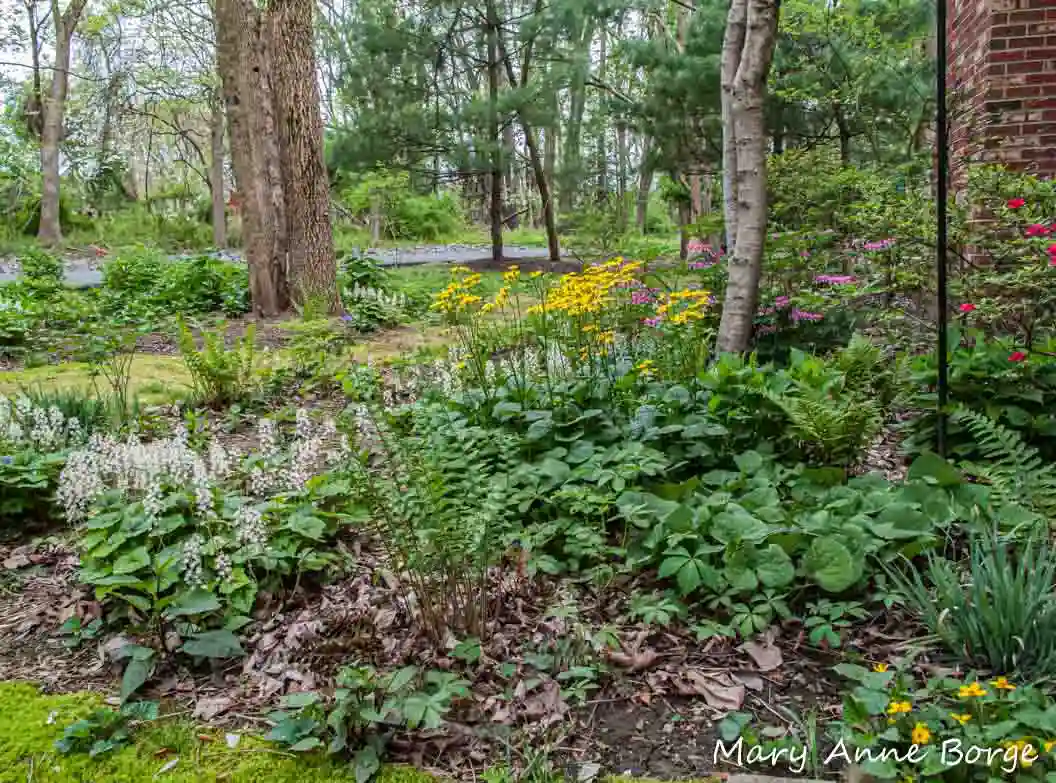
With the permission of our Homeowners’ Association (HOA), my husband and I replaced the lawn next to our home several years ago. We had a lot of shade, and no matter what we or our HOA did, the lawn died by July every year.
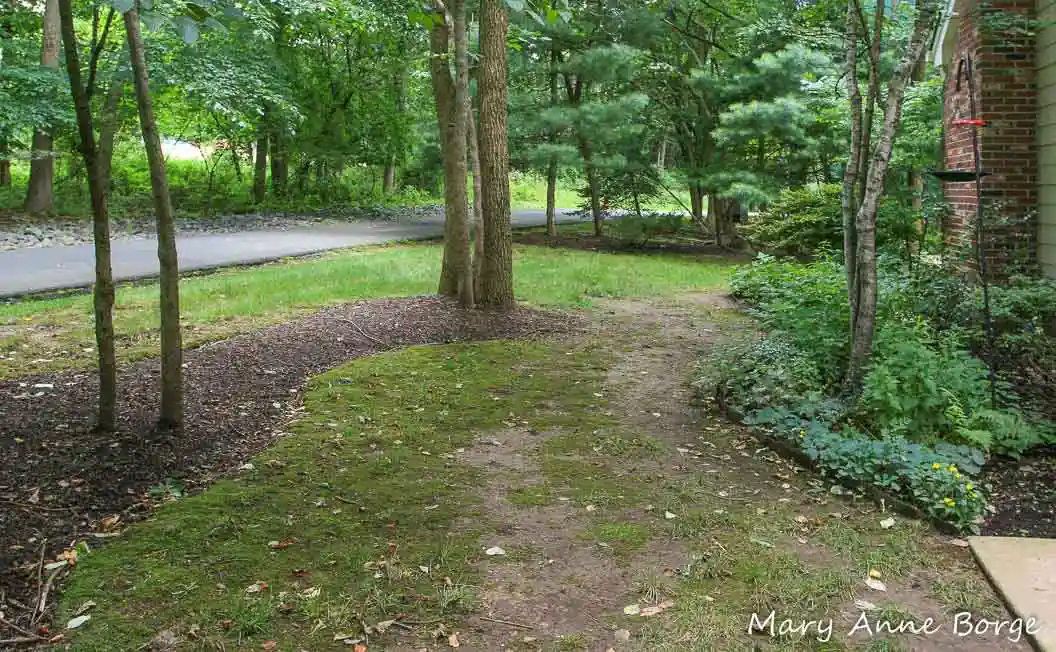
The good news was that the moss was doing great!
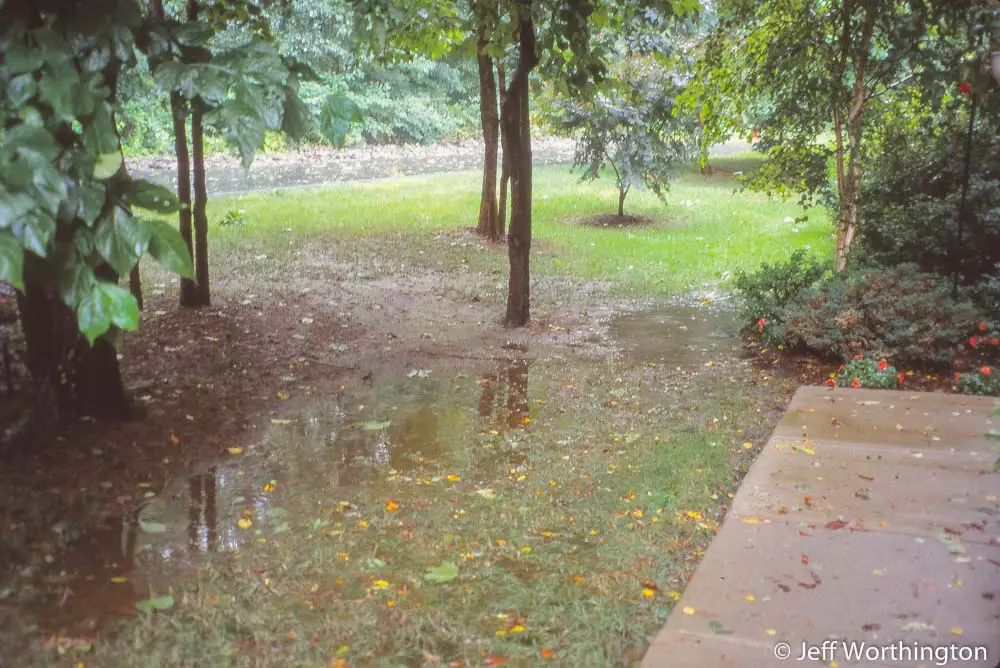
When it rained, water pooled, and it took a long time for the hard clay and shale soil to absorb the stormwater, or for the water to evaporate.
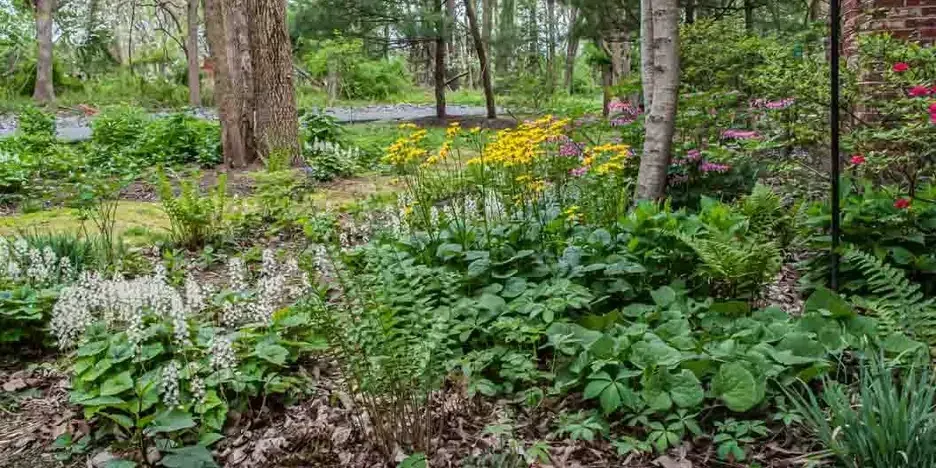
Now that we have a garden of native plants, stormwater is absorbed in the ground as it falls, or in an especially heavy rainfall, within an hour or two. We host pollinators from April through November, and birds year-round.
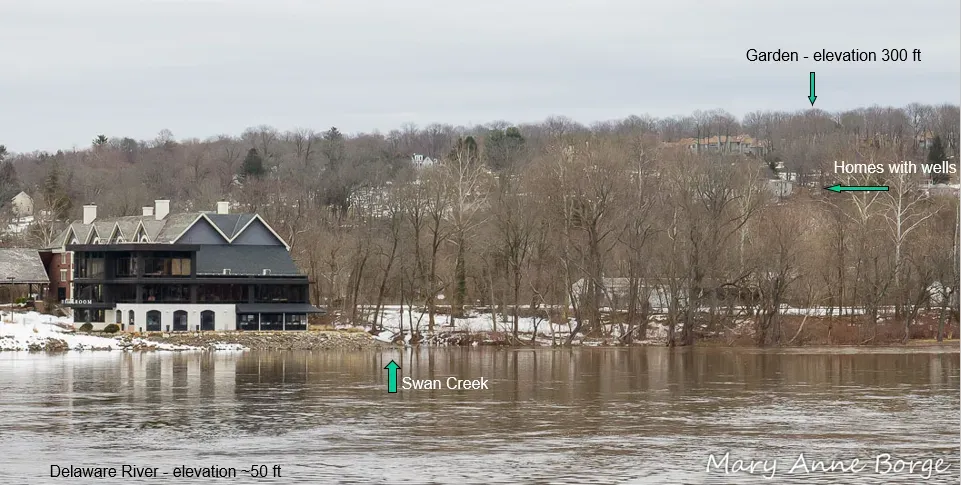
If it’s not absorbed by the soil, rain that falls on the hill where we live will go into the storm sewer system, which flows into Swan Creek. Our garden helps not just my husband and me, but all of our downhill neighbors, whether they have wells, or live in the floodplain.
We need to do everything we can to make our community more resilient in the face of these extreme events, and to help the struggling wildlife with which we share our habitat. Replacing lawn with native plants is one action each of us can take to help mitigate the effects of weather extremes, and to provide food and habitat for the bees, butterflies, birds and other wildlife with which we coexist, and on whom we depend for a livable environment.
How to Apply
For Lambertville’s rebate program, qualifying projects must replace lawn with a garden of plants native to our region. Projects may be rain gardens, pollinator gardens, meadows, a new hedgerow, tree planting, or other project that meets these qualifications. Funding for such projects is $5.00 per square foot of lawn replaced with a native plant garden. For planting trees of 2-inch caliper or greater, the rebate is $100 per tree. Trees must replace lawn. The maximum rebate is $700 per property. All properties within the following communities are eligible: City of Lambertville, West Amwell, East Amwell, Delaware Township, Stockton, Hopewell Borough, Hopewell Township, and Pennington.
Applications must be received no later than October 1, 2026. The program will terminate sooner if all of the funding is disbursed, so get your applications in early.
More information and the application are available on the City’s website. If you have questions, email lawnrebatelv@gmail.com.
This rebate program was made possible by a $20,000 grant awarded through the Sustainable Jersey Grants Program funded by the PSEG Foundation.