Fighting for the Future: Jeff Tittel on Contamination, Community, and Caring

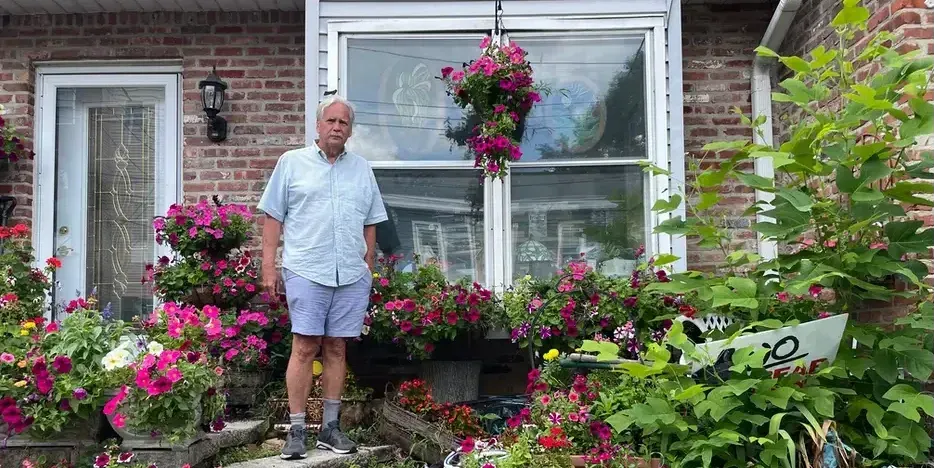
The flowers on Jeff Tittel’s front porch act as a visual metaphor for his life’s work: if you care for something, it will flourish.
From a young age, Jeff Tittel saw firsthand what he describes as, “the impacts of environmental racism, sexism, and classism.”
When he was a kid, he and his friends would visit a nearby stream so they could throw matches into it, and watch it flare up.
“Some days it would be pink, some days it was purple, and other days it was iridescent blue,” Jeff recounted.
Born in Newark and raised in Hillside, Jeff came up in federally-built housing.
His grandparents were old-time radicals who threw rent parties when someone in the community got threatened with eviction. His father was a factory worker.
There was a foundry on the other side of the woods from his childhood home. When it was active, Jeff could write his name in the pollution on his dad’s car.
In contrast, Jeff worked summers in rural Ringwood, NJ where his family helped run Camp Midvale—New Jersey’s first interracial camp. There he could fish, swim, breathe fresh air, and safely drink water directly from a stream.
Guests at the camp were trade union and farm union members, and conservationists. Influential people such as Cesar Chavez, Joan Baez, Ossie Davis, and James Baldwin visited the camp to write, retreat, speak, or perform.
“It gave me that ethic,” Jeff said about his time there.
Though he credits the camp, it seems that good ethics ran in Jeff’s family.
His first protest was a sit-in at a Woolworth’s in Newark to resist the company’s continued segregation in their southern stores. He was just 4 years old.
“Environmental justice is not about justice,” Jeff clarified, “It’s about fighting discrimination when it comes to pollution, because poor and minority communities get the overburden of pollution. They don’t build incinerators in Short Hills or Alpine, but they put them in Newark or Elizabeth.”
Too Pro-Environment
Jeff met his wife, Barbara, over 35 ago at a planning board meeting in northern New Jersey. Barbara was the chair of the board, but she ultimately got kicked off for being “too pro-environment.”
The couple enjoyed living in Ringwood, but they ended up spending a lot of their time “fighting local politicians who were trying to ruin the place.”
Jeff formed Skylands Clean, the Highlands Coalition, and Strong Forest Coalition—all to battle the big development boom of the ’80s.
Collectively, they blocked the construction of a power plant that that would’ve stored oil right next to the reservoir. They stopped 1,200 condominiums from being built on Ramapo Mountain. They also thwarted a quarry, uranium mining, and they got state and federal money to buy Sterling Forest, which prevented it from being turned into a city of 35,000 people.
In the ’90s, Barbara took a job in Trenton and Jeff began working for the New Jersey chapter of the Sierra Club. That’s when they relocated to Lambertville.
While house hunting, their locally-based real estate agent wouldn’t show them any properties on Connaught Hill, so they ended up buying a place downtown.
Jeff described Lambertville at the time as being kind of sleepy, but he felt lucky to have river trails, restaurants, bars, a bookstore, and the Acme supermarket (which was still in business at the time) all within walking distance of his home.
“The people who worked in the shops and restaurants could afford to live in town, and most of the local businesses were owned by people who also lived here,” Jeff said, adding, “It’s not the same now. Now you’re getting hospitality companies coming in, and the restaurants are more expensive and not as good.”
According to Jeff, there weren’t many controversies in Lambertville when he first moved in, and so he stayed out of things. Since he was traveling a lot for work, it was a relief that he didn’t have to fight any battles at home.
“All that changed,” he said, “when [former] Mayor Fahl suggested building a $14 million dollar municipal complex in the parking lot behind the Acme, and then sell our historic library and city hall to developers to build boutique hotels, and then sell the police station to a developer to build a five-story apartment building in the flood zone next to high density power lines next to a stream on a site that’s probably contaminated, because it had been an auto body place.”
Though he implied otherwise, Jeff was always active locally. He helped former Mayor DelVecchio write the plastic bag ban in town, which was used in part for the state plastic bag ban bill that Jeff also helped write. He lobbied to get Goat Hill purchased. He protected local streams, and ten years ago he fought the Penn East Pipeline, which would have gone right through Connaught Hill.
In 2021, Jeff retired from 23 years of serving as Lobbyist and Director of the New Jersey Chapter of the Sierra Club. However, he didn’t stop being Jeff. He’s now caregiver for Barbara, and he still finds time to care about the community.
Contamination on the Hill
Nearly three decades after a real estate agent steered Jeff away from buying on Connaught Hill, many of its residents have begun to discover that their well water is contaminated with PFAS, which are also known as forever chemicals.
The source of the contamination is currently undetermined, but locals point to an old town dump that operated in the neighborhood during the 50s and 60s—if not longer. They also suspect the former Taurus Electronics factory location to be a culprit, because locals say the company made parts using Teflon.
As Connaught Hill residents wrestle with the fallout of drinking contaminated water—potentially for decades—K. Hovnanian Homes recently won a builder’s remedy lawsuit against Lambertville that enables the company to build on 20+ acres of undeveloped woodlands in the same neighborhood.
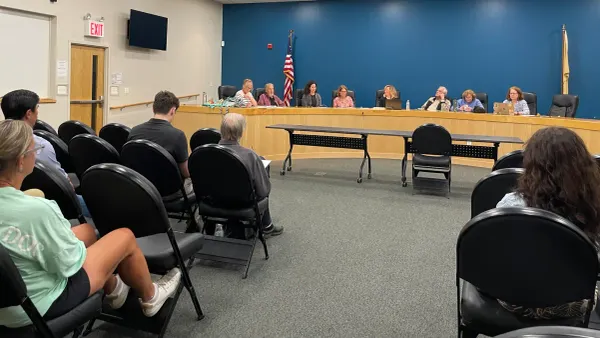
Jeff has a lot to say about this. For months he’s been a vocal critic at City Council meetings. He argued that Lambertville’s legal defense wasn’t tough enough, and he made recommendations about how to strengthen the case.
He’s been regularly sounding the alarm with lengthy and informative posts on the Lambertville Facebook Group, and he often uses attention-getting rhetoric and titles such as, “The Houses on Haunted Hill – The KHov Disaster.”
He was featured in an article in the Jersey Vindicator about the impacts of the contamination, and another about how Connaught Hill is still in jeopardy.
Jeff hopes every well on Connaught Hill will get remediated with filters, but he also wants to find the source of the PFAS so the contamination can be removed.
“PFAS itself is used in many different products, but it's very carcinogenic and it bioaccumulates. It can be in the drinking water, or it can be inhaled. If it’s in the soil it will keep leeching and spread. The more it spreads the more it ends up in the streams and reservoirs, so finding the source is really key,” he said.
Jeff speaks from experience when he talks about how K. Hovnanian plans to build 200 townhomes and a 40-unit affordable apartment building on the hill.
“I was involved in the EPA lawsuit where they found them responsible for violating the clean water act at 540 projects around the United States, including 54 in New Jersey. They've also been cited numerous times for illegally piping streams that were blue line trout streams that were high quality waters, and they've been cited for filling in wetlands, and for stormwater violations.”
“Piping streams” means the developer puts in a culvert and builds over it instead of leaving the stream open and untouched.
“They’ve also been cited for building developments on top of contaminated sites without them being cleaned up. Hickory Manor in Union is one of the examples. They did it Jersey City. They did it in Newark. They did it in many other places. They’ve also been cited for using faulty plywood that caused roofs to buckle. They were cited for using wood that was leaking formaldehyde. They’ve been sued and sued and sued so many times.”
Jeff feels that the responsibility for the city losing the lawsuit to K. Hovnanian falls squarely on Mayor Nowick.
“Was it incompetence, or sabotage? I think the mayor wanted this project all along and he’s very satisfied with the outcome. I shouldn’t say ‘think,’ because I don’t know what he thinks, but if it walks like a duck and quacks like a duck... I think this is the outcome he wanted. He seems to be very pro development.”
Hardware to Hotel
Jeff is a vocal opponent of the planned 49-room Coryell Hotel campus slated to replace the Finkles properties on Coryell Street. He’s also a founding member of S.O.U.L. (Save Our Unique Lambertville), which is organizing to fight the project.
“The Finkles battle is the symbol of a greater battle,” Jeff explained, “It’s the battle between maintaining the character of the community, its historic importance, and the neighborhood feel versus the Hamptonization of Lambertville.”
Jeff is, of course, referring to the Hamptons on Long Island, which used to be where New York City artists and writers would relocate, because it was a beautiful and affordable place where artists could earn live on their creativity.
New Hope and Lambertville have similar artistic origin stories, but now artists are increasingly unable to afford to live in either town, let alone in the region.
Jeff is not unrealistic. “It’s one thing when it’s Lambertville Station and they have their own parking lot. They’re at the edge of the business district, but they’re not really in anybody’s neighborhood. This is just right in front of people’s homes, and the problem is that it’s just too big and too dense.”
It’d be easy to say Jeff is anti-development, but that’s not the case. He knows the Finkles properties are changing, and he’s not opposed if it’s resonable.
“Nobody is saying that site shouldn’t get developed, but it should be in perspective to the community. It shouldn’t overhwlem the community. It shouldn’t gridlock the area traffic. It shouldn’t cause a lot of pollution and noise, and so it’s really about scale.”
Lambertville Lobbyist
Jeff’s firebrand style of communication gets attention, and sometimes pisses people off. It’s difficult to know if that’s by design or not, because Jeff doesn’t seem fazed by others’ opinions of him—he has a bigger picture in mind.
Over his career, Jeff helped pass a constitutional amendment, worked with politicians on every level, was named one of the Most Influential People in New Jersey by the Star Ledger, and was listed on the New Jersey Politics Power List.
As a lobbyist, Jeff was involved in every major peice of environmental legislation passing in New Jersey since 1998. Some of his achievements include the passage of the California Car Law, the Highlands Act, New Jersey’s Global Warming Response Act, New Jersey’s Fertilizer Law, NJ’s Electronic Waste Recycling Law, and the Indoor Smoking Ban.
Jeff was also behind the open public records act, because, as he said, “the only way we can fight special interests is through an open process.”
His career is a reminder that our community’s livibility is the result of past battles fought and won, or problems passed on by careless predecessors.
If you really listen to what Jeff is saying, and you realize who he’s fighting for, then it’s hard not to stand with him. That is, unless you don’t care.