Keep Lambertville Weird
This blog post can be sponsored by you. Display your link and message here to be seen by local residents and Lambertville area visitors—permanently.
In spring of 2017, Yolanda Hadid, model and former star of The Real Housewives of Beverly Hills, purchased a $3,700,000 estate in New Hope, PA.
Hadid’s daughters, Bella and Gigi, are also models. In 2020, Bella Hadid and pop singer Dua Lipa were seen in New Hope (Lipa was dating Yolanda’s son, Anwar).
Gigi Hadid and former One Direction singer, Zayn Malik have a daughter together. Malik purchased a Bucks County horse farm nearby in 2018.
On March 11, 2021, the New York Post ran a story saying New Hope had become a celebrity hotspot. The article read, “Since the 1950s, New Hope has supported paint slingers, hippies, bikers and a thriving gay scene. Today, bohemia is giving way to big spenders and the hamlet of 2,500 residents now attracts a wealth of Midtown executives, Broadway bigshots and celebrities.”
Ron Gorodesky, President of Refined Hospitality (developer of Odette’s) was quoted as saying, “New Hope had gone through a period of, dare I say, some decay over the last 20 years. It was time to invest in New Hope and we have invested heavily, as have others. You are seeing a transformation of this town.”
In 2023, actor/director Bradley Cooper (a PA native) and Gigi Hadid began dating. In 2024, Cooper purchased a $6,500,000 estate in New Hope, the same year he and Gigi Hadid were spotted in the private rooftop club at Odette’s.
Hollywood is not moving in, but as New Hope goes from hippie-dippie to hoity-toity, it has been reported that the “area’s glamour quotient is on the rise.”
Old waterfront homes on Main Street have been torn down and replaced with multi-million dollar modern mansions. Valet parking hospitality venues like The Logan Inn, The Mansion Inn, and The Ghost Light Inn have elbowed their way into the space previously managed by individually owned bed and breakfasts.
The outdoor restaurant that was once down the stairs by the canal on Mechanic Street is now town homes. Across the way, the one-level store that previously housed Chateau Exotique has been replaced by a $2,350,000 private residence.
At the time of this writing, a Mechanic Street condo was for sale for $2,850,000, and a riverfront property on South Main Street was asking $4,500,000.
It used to be that restaurant workers could live in town and walk to their jobs. Today, people who work in town increasingly can’t afford to live there.
A small apartment above the bookstore—with views of Main Street on one side and a parking lot on the other—rents for $3,100 per month, plus all utilities.
The Raven, a popular LGBTQ+ club, was torn down in 2019. It was replaced with a valet parking lot for the River House at Odette’s hotel, which is 1.5 miles away.
At the time, developers said they had plans to serve the LGBTQ+ community when their new property was finished, but they had no idea how long it would take for those plans to happen, because the permitting was unpredictable.
Establishments like John and Peter’s, Havana, Karla’s, God Save the Qweens, Shop of India, and Love Saves the Day keep the area feeling familiar for anyone who hasn't visited in a while, but it’s hard to say how long that will last.
On October 4, 2024, Philly Magazine published an article about how New Hope has become a playground for the rich and famous.
On January 11, 2025, The New York Times published a story about famous people flocking to New Hope, because it is becoming a rival to the Hamptons.
On February 9, 2025, The Daily Mail (in the United Kingdom) ran a story saying that New Hope, Pennsylvania is poised to become the new Hamptons.
Similar stories echoed in Bezinga, Yahoo!Finance, MSN, Patch, New Hope Free Press, and DNYUZ, but there was one publication that took a different approach.
Six months earlier, on April 4, 2024, the Philadelphia Inquirer wrote about how development was changing the character of New Hope—and not for the better.
The article named Frank Cretella, developer of River House at Odette’s, and pointed out that New Hope had rejected Cretella’s proposal to build a resort complex by the bridge on Main Street. Cretella said he wasn’t giving up.
Lori Stagnitto, a local resident, worried New Hope is losing its “funky soul,” and Michael Gardner, a drag performer and former bartender at The Raven, was quoted as saying, “Developers are completely altering the town.”
There was a photo of Donna Marian, owner of The Creeper Gallery, who lost her lease due to construction at The Mansion Inn, and a quote from Stasia Kauriga, owner of Love Saves the Day, who said, “We’re trying to keep New Hope weird.”
Keep Austin Weird
When Red Wassenich, a community college librarian from Austin, TX, called to make a donation to his local radio station in 2000, the DJ put him live on the air and asked why he was donating.
“Because it keeps Austin weird,” Wassenich replied.
His response—spoken impromptu and from the heart—captured a sentiment.
Austin was a haven for Texans who didn’t fit in Texas, and thus the city became a hub for funky mom-and-pop shops, locally-owned restaurants, and indie music.
By the time Wassenich made his radio station pledge, his previously affordable hometown had been overrun by tech companies and expensive housing.
Wassenich and his wife, Karen Pavelka, started making “Keep Austin Weird” stickers, and they gave them to friends and associates. The slogan was popular. Their dog groomer sold stickers to raise funds for the local animal rescue.
Stickers and t-shirts proliferated. The Austin Independent Business Alliance started using Keep Austin Weird to promote local business, and then a private company called Outhouse Designs trademarked the phrase.
Wassenich and Pavelka wanted ‘Keep Austin Weird’ to belong to the people of Austin, but they couldn’t afford to hire lawyers to fight an expensive legal battle.
Wassenich died of complications from COPD in 2020. Outhouse Designs continues to sell Keep Austin Weird stickers, t-shirts, mugs, and merchandise.
Keep Portland Weird
A mural bearing the words “Keep Portland Weird” is painted in bright yellow letters on the black outside wall of Dante’s nightclub in downtown Portland, OR.
However, it was Terry Currier, owner of Music Millennium record store, who first brought the phrase to Portland from Austin when he created “Keep Portland Weird” and, “Keep Portland Weird — Support Local Business” bumper stickers.
The slogan resonated with residents who felt that Portland was selling its soul.
Portlandia, a sketch comedy TV show that made fun of Portland, said, “the dream of the 90s is alive in Portland,” meaning Portland was the kind of place where you could work part-time as a barista while pursuing your dreams. But that’s not the case anymore. Rents have skyrocketed, and housing is expensive.
The city’s leadership actively worked to attract tech companies, while developers demolished historic buildings, and built high-density housing.
Some of Portland’s beloved “weird” artists—Stephanie Peirce, creator of the 24-Hour Church of Elvis, Kirk Reeves, street musician and public access TV star, and Pontifex Von Hummer, a lobster-wearing musician/filmmaker—are no more. Two became homeless, one killed himself, and the other moved out of state.
There are many such stories about Portland losing its unique character, which prompted Terry Currier in 2021 to say Portland isn’t as weird as it once was.
Keep Asbury Park Weird
On the east side of the country is Asbury Park, NJ, the beachfront town where Bruce Springsteen got his start. Things there have changed a lot since Springsteen released his “Greetings from Asbury Park, N.J.” album in 1972.
The place was neglected for years until artists, musicians, and the LGBTQ+ community moved in. Creativity thrived, and development soon followed.
The long-abandoned boardwalk and convention center got renovated. Condos were built. Now the revitalized city is home to art galleries, film festivals, music stores, boutique shops, and an eclectic mix of cafes, bars, and restaurants.
K. Hovnanian Homes recently completed a condominium complex there called The Aegean, which is selling units for around $1,000,000 each. As tourists and newcomers flock to the area, many long-time residents have been priced out.
With all that change, locals have start saying, “Keep Asbury Park Weird.”
Keep Lambertville Weird
Lambertville started as a trade route stop between New York and Philadelphia, and grew into an industrial town that, throughout its history, manufactured products such as wagon wheels, rubber boots, hairpins, and toilets.
At one point the city had as many brothels as it did churches. When the train stopped stopping here, factories closed and industry moved to Trenton.
Eventually Lambertville became a place you would drive through. Houses and buildings sat empty. People from New Hope, PA called Lambertville “No Hope.”
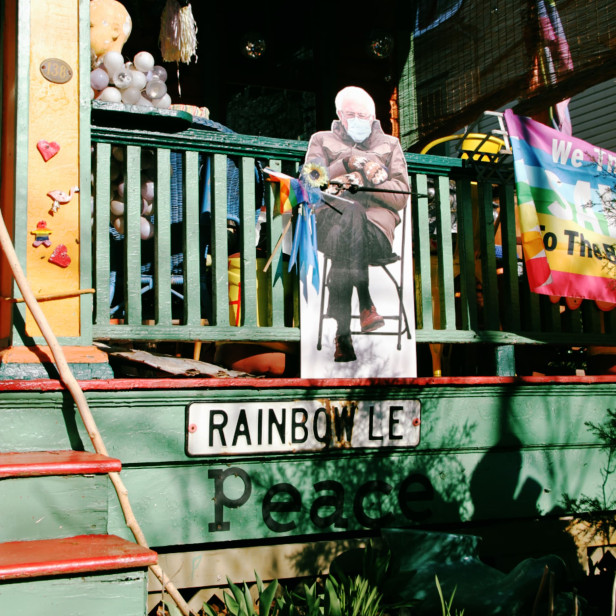
Being off the beaten path kept the architecture unchanged, and being bound by the river and a hill kept the city small. Between the late 60s and the 80s, artists, creatives, craftspeople, and crackpots (said lovingly) started moving to the area.
Lambertville was a freewheeling place. One resident ran a motorcycle shop out of his living room on Main Street. Another operated a hair salon in the enclosed front porch of her house on York Street. Restaurants operated in residences.
In the early 80s, the abandoned Lambertville train station got repurposed into a restaurant/inn, which attracted tourists to cross the bridge from New Hope.
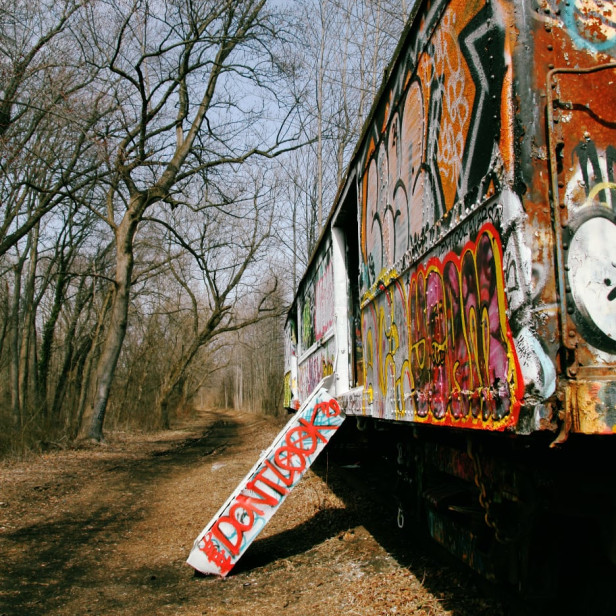
In the 90s, the Lambertville House was renovated and Lambertville gained a reputation for being New Hope’s sister city with its own shop-filled business district and unique attractions such as the wing dam, graffiti-covered train cars, an abandoned high school, canal walking trails, and Goat Hill Overlook.
That same decade, Rock Creek Woods town homes sprawled off Quarry Street, and Woodcrest town homes were built above the cemetery. Nearly ten years later, the town homes at Lambert’s Hill blanketed the land behind Closson Farm, and town homes replaced green garages by the Post Office on Clinton Street.
In 2020, the area became especially attractive to people escaping big city COVID. Low interest rates and high demand made prices skyrocket.
In the past few years, the YMAC building on Wilson Street was demolished and replaced by town homes. An empty lot on Church Street became town homes. Town homes were built on Ferry Street. The auto supply shop at Clinton and Delevan became town homes, and town homes are being built on Wilson Street.
On Coryell Street, Finkle’s hardware store, the lighting shop, the warehouse, the (former) Pork Yard, the Boathouse, and the Strand theater have all been sold, paving the way for a new promenade near the Lambertville-New Hope bridge.
Just around the corner, a new duplex of town homes is slated to be built in the vacant lot next to the red house on Lambert Lane.
At the same time, K. Hovnanian Homes—the developer selling million-dollar condos in Asbury Park—wants to build 100+ town homes on Connaught Hill.
Low inventory and high demand have caused an increase in retail and residential rents. The city lacks affordable housing, but the city council is working on it.
Long-time residents might argue that Lambertville already lost its weirdness. Gone are the Submarine Races and the Lambertville Strip Club. Circus elephants don’t winter here anymore, and pigs no longer run loose on South Union Street.
On October 2, 2019, The New York Times reported that Lambertville was looking to attract innovative businesses, but council members have changed since then.
In June 16, 2022, The New York Times reported that Lambertville and New Hope are great alternatives to Fire Island, and the article quoted a 25-year-old visitor who said, “There’s a ton of money here, and a lot of younger people are effectively priced out of living in this entire region.”
Recently, Lambertville was nominated for Best Small Town in the Northeast by USA Today, and named in HGTV’s 50 Most Charming Small Towns in America.
When ritzy business comes to town, it’s likely that a targeted PR campaign will closely follow so to tell the world about Lambertville’s funky-to-fancy transition. The purpose, of course, is to attract “a wealth of executives, big shots and celebrities” who want, and can can afford to pay for, that brand of luxury.
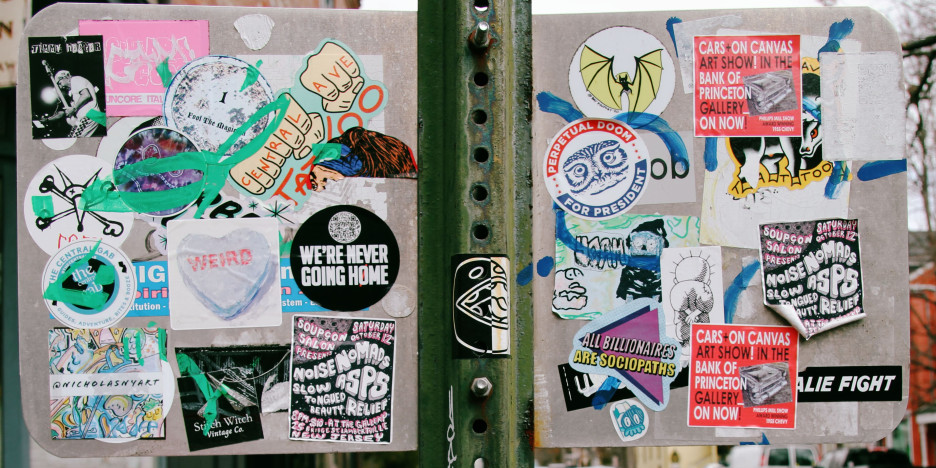
If you long for “old” Lambertville, you might be tempted to scream a magic incantation into the sky. Unfortunately, when residents start chanting “Keep [wherever] Weird,” it means the weirdness has already started to bleed out.
These days, people buy weird instead of being weird. The rallying cry that started as a grassroots social movement has been transformed into commercial irony—mugs, bumper stickers, and t-shirts won’t stop a town’s commodification.
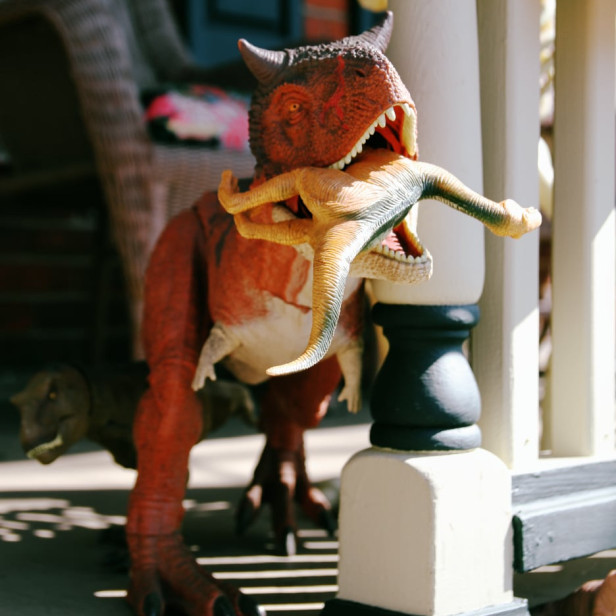
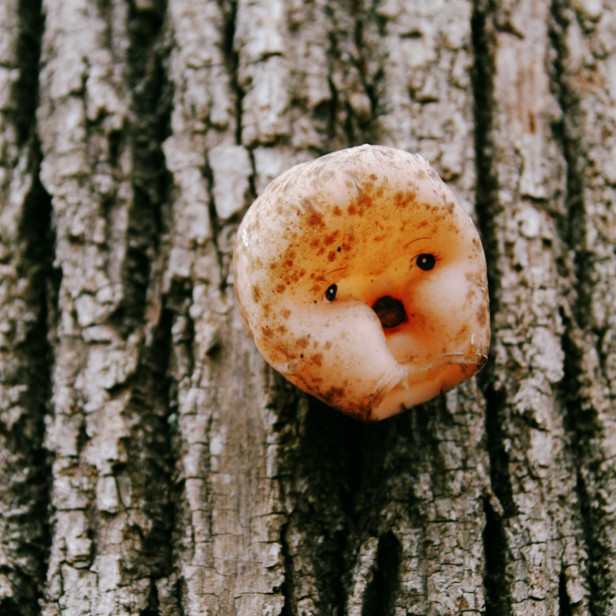
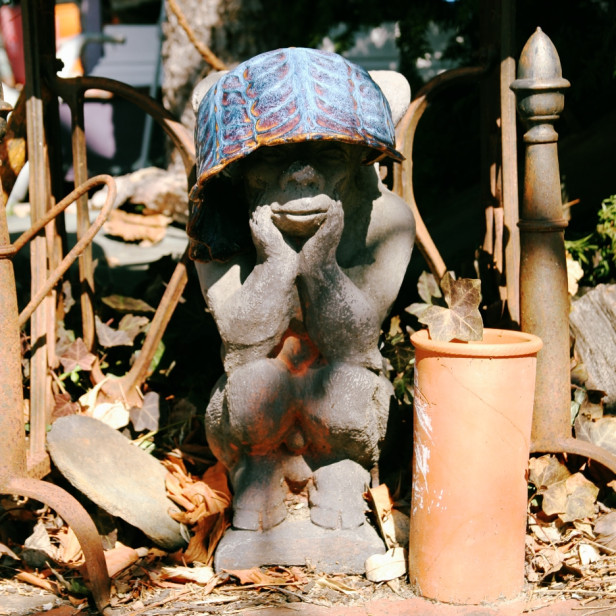
It’s not the number of houses or stores that’ll “keep Lambertville weird.” What makes this place special is the people who live here, shop here, and foster our community. For those who identify as weird: be weirder! It’s no magic bullet, but letting your freak flag fly can attract like-minded businesses and neighbors.
If New Hope has become “New Hamp,” Lambertville must be “No Hamp.”